




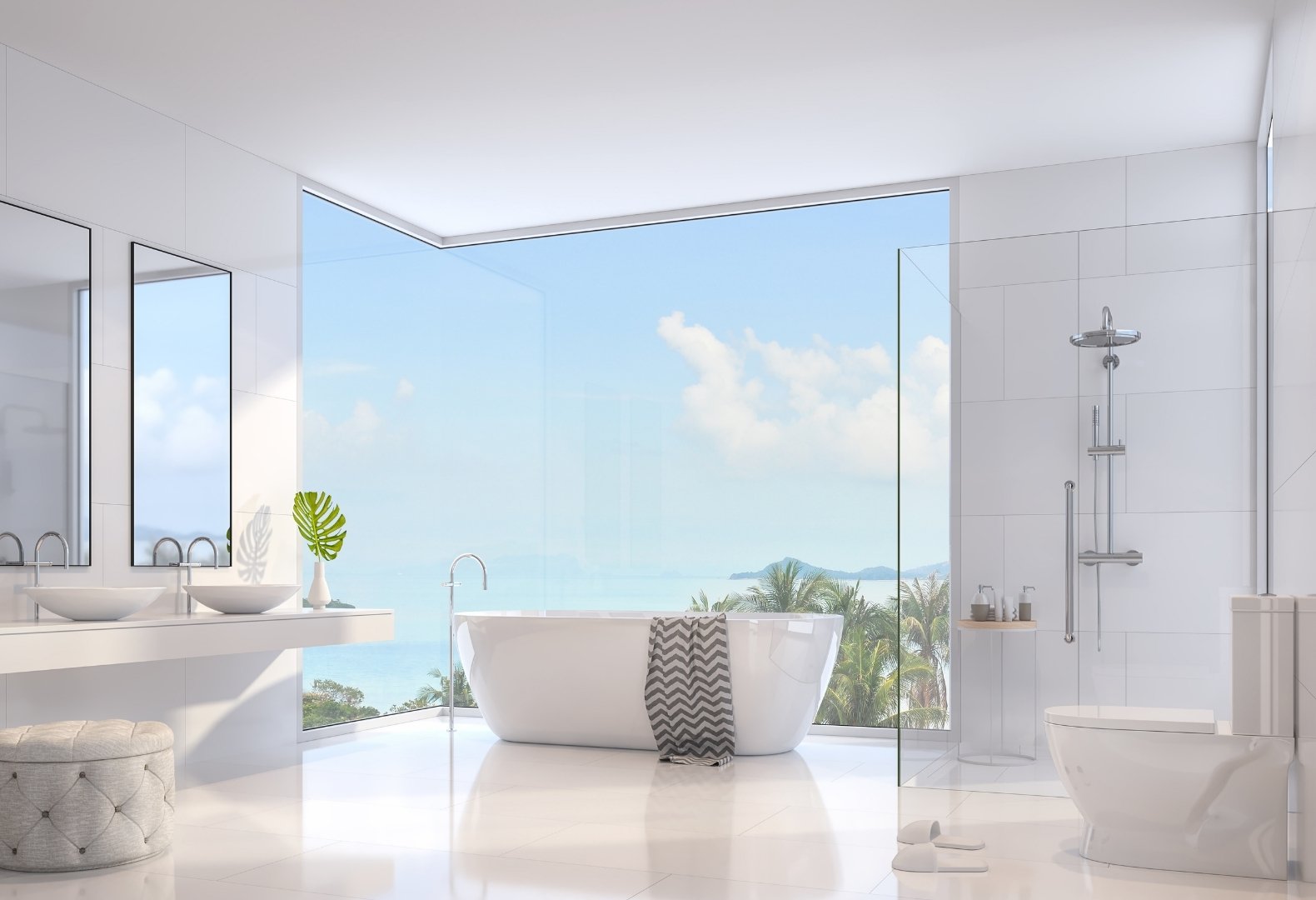
Designing a small bathroom that feels spacious is one of the greatest challenges in bathroom design. Every choice, from wall color to surface finish to lighting, affects how open or closed a space feels. For those working with compact layouts, the right use of colors, textures, and finishes can make a bathroom appear significantly larger without expanding its footprint.
The following design strategies highlight how surfaces and finishes can transform small bathrooms into functional and airy spaces while still delivering an upscale, modern look.
Color Selection in Bathroom Design
Color is one of the most powerful tools in bathroom design. Light tones such as whites, soft grays, and neutrals reflect more light, giving the impression of expanded space. Darker colors, while stylish, tend to close in a room, so they are best used sparingly as accents rather than for the entire wall or floor.
Monochromatic palettes are another effective trick. Choosing a single color family for walls, floors, and fixtures eliminates visual breaks, creating a seamless effect that makes the bathroom feel larger. High-gloss finishes further amplify this effect by bouncing light throughout the room.
Even when contractors work with simulated tile or acrylic wall systems, selecting designs in lighter tones with subtle veining or patterns can mimic natural stone while maintaining brightness. This approach not only enhances the design but also improves functionality through durable, easy-to-clean surfaces.

Texture and Finish to Create Depth
Texture has a direct influence on how bathroom surfaces interact with light and space. Smooth, polished finishes give the illusion of openness, while heavily textured materials can sometimes overwhelm a small room.
Strategic contrast between matte and glossy finishes can create depth without adding clutter. For example, pairing glossy wall panels with matte flooring establishes a visual balance that keeps the bathroom interesting without making it feel crowded. Similarly, subtle simulated tile systems with clean grout lines can provide the look of traditional tiling without the maintenance issues, maintaining both beauty and practicality.
Mirrored or reflective surfaces also play a significant role in expanding space. Installing a large mirror or choosing fixtures with a chrome or brushed metal finish reflects both natural and artificial light, further contributing to a sense of openness.
Lighting as a Space-Enhancing Tool
Even the best surfaces and finishes require proper lighting to achieve their full effect. Poorly lit bathrooms often feel cramped, regardless of color or finish. A layered lighting plan solves this issue, incorporating ambient, task, and accent lighting to ensure the entire room is illuminated.
Ambient lighting provides general illumination, often through recessed ceiling lights. Task lighting, especially around mirrors, eliminates shadows and ensures functionality. Accent lighting highlights design features, such as wall textures or unique finishes, adding visual interest.
Light color temperature also matters. Cool white lighting enhances the reflective qualities of glossy walls and fixtures, while warm lighting creates a cozy atmosphere. In small bathrooms, striking a balance between these two can prevent the space from feeling too clinical or too dim.
Strategic Use of Patterns and Visual Lines
Patterns and lines can manipulate the perception of space. Vertical patterns draw the eye upward, making ceilings appear taller, while horizontal lines elongate the room. Simulated tile designs that replicate stone or tile layouts can be aligned in ways that emphasize room proportions, enhancing the feeling of space.
Consistency in patterns also matters. Overly busy designs can make a bathroom look smaller, while large-scale patterns in neutral tones add depth without overwhelming the eye. Contractors can advise homeowners on selecting wall and floor systems that subtly guide the eye and create an impression of openness.

Combining Durability with Design
While aesthetics are essential, materials must also withstand daily use. Bathrooms demand surfaces that can handle moisture, cleaning products, and constant wear. This is where modern alternatives to traditional stone or ceramic tiles shine. Acrylic wall systems, for example, provide a sleek and uniform look while resisting mold and mildew. Simulated tile wall systems offer the same design flexibility without the upkeep of grout.
Balancing longevity with design ensures that a bathroom not only looks larger but also remains practical and durable for years. This alignment of style and performance helps contractors deliver value that goes beyond initial aesthetics.
Surfaces and Finishes That Deliver Lasting Impact
Creating the impression of space in a small bathroom requires more than clever layout—it depends on the thoughtful use of colors, textures, finishes, and lighting. From light-reflecting surfaces to strategic texture contrasts and layered lighting, the right design choices can transform even the most compact bathroom into a space that feels bright and open.
For those seeking reliable solutions that combine beauty with durability, ISI Bathroom Systems offers products that deliver proven results. We offer wall systems that replicate the appearance of natural stone, and simulated tile wall systems, providing a clean, structured look similar to traditional tiles, without the burden of grout maintenance. For fixtures such as bathtubs and shower bases, our TopKote reglazing products ensure surfaces remain in excellent condition, preserving both function and design over time.
We believe that bathroom design should never be limited by space. With the right surfaces and finishes, contractors can create environments that maximize both aesthetics and performance. Visit our shop to explore all of our products that support these design strategies.


